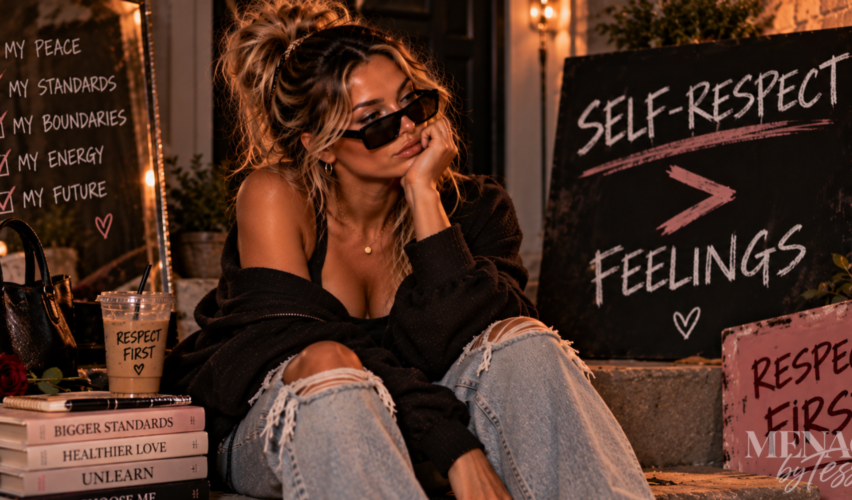
Love gets most of the attention, but respect is what determines whether a relationship can actually survive. It’s easy to fall for someone’s charm, chemistry, or the way they make you feel in the beginning. Those things create excitement, but they aren’t what carry two people through disappointment, conflict, or everyday life. When respect is missing, even the strongest feelings eventually become weighed down by resentment. That’s why respect should never be something you hope develops later—it should be there from the start.
I’ve learned that respect isn’t measured by grand gestures or expensive gifts. It’s revealed in the ordinary moments that often go unnoticed. It’s how someone speaks to you when they’re frustrated. It’s whether they listen without trying to win every conversation. It’s how they honor your time, your boundaries, your opinions, and your feelings, even when they disagree. Respect shows itself in consistency because it isn’t something a person turns on when it’s convenient.
One of the biggest mistakes we make is believing love automatically creates respect. Unfortunately, it doesn’t. Someone can genuinely love you and still treat you in ways that are careless, dismissive, or emotionally unhealthy if they haven’t learned what respect truly looks like. Love is an emotion. Respect is a choice that’s reflected in behavior. Healthy relationships require both. One without the other leaves the relationship constantly fighting to stay balanced.
The truth is, respect creates emotional safety. When you know someone values your voice, honors your boundaries, and considers your well-being, trust begins to grow naturally. You don’t have to constantly question where you stand or wonder if expressing your needs will start another argument. Respect creates an environment where vulnerability feels safe instead of risky. That’s what allows love to deepen over time instead of becoming overshadowed by fear and uncertainty.
I’ve realized that many of us were taught to chase affection before evaluating character. We looked for sparks instead of stability. We prioritized chemistry over consistency. We became so focused on whether someone wanted us that we forgot to ask whether they respected us. Looking back, some of the relationships that hurt the most weren’t lacking attraction—they were lacking mutual regard. No amount of passion can compensate for feeling unseen, unheard, or undervalued.
This doesn’t mean respect eliminates every conflict or disagreement. Healthy couples challenge one another, make mistakes, and occasionally hurt each other’s feelings. The difference is how they respond afterward. Respect takes responsibility instead of making excuses. It seeks understanding instead of control. It protects the relationship instead of trying to win every argument. Even difficult conversations become opportunities for growth when respect remains at the center.
Healing taught me that respect isn’t something I should have to earn by proving my worth. It isn’t a reward for being patient enough, forgiving enough, or accommodating enough. It’s the starting point. If someone consistently struggles to treat me with kindness, honesty, or consideration, no amount of potential or chemistry can make that foundation strong enough to build a healthy relationship. My standards changed when I realized respect wasn’t asking for too much—it was asking for the minimum.
The woman I’m becoming no longer puts love ahead of respect. She knows that butterflies fade, excitement settles, and life eventually tests every relationship. What remains is the way two people choose to treat one another every single day. She wants a relationship where love is expressed through respect, where boundaries are honored without resentment, and where both people protect each other’s dignity as carefully as they protect their own.
Tessa’s Final Thought
Love may be what brings two people together, but respect is what determines whether they can stay together in a healthy way. Stop making love your first requirement. Make respect your first requirement, and let love grow from there.
Disclaimer: This is about self-awareness, not control over others. The focus is always on your choices and your standards.